04
 CO₂ Resource
Utilization
Technology
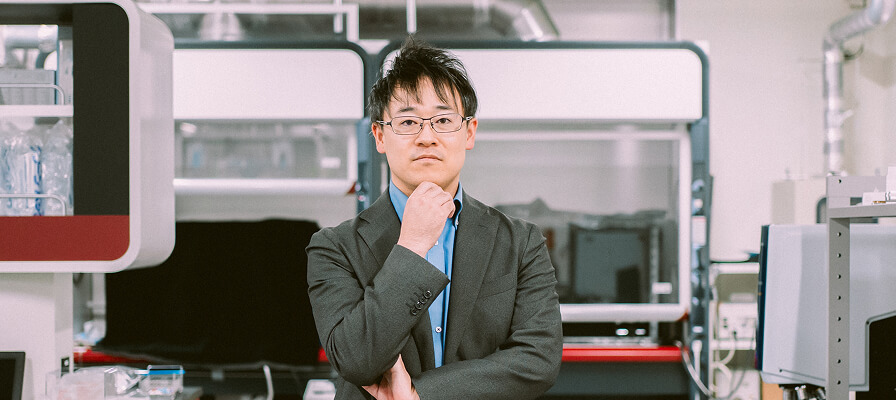
| Group Leader: | Taro Yoshikawa, Ph.D. Specially Appointed Associate Professor |
|---|---|
| Specialization: |
|
| Keywords: |
|
Driving the transition toward a carbon-neutral future
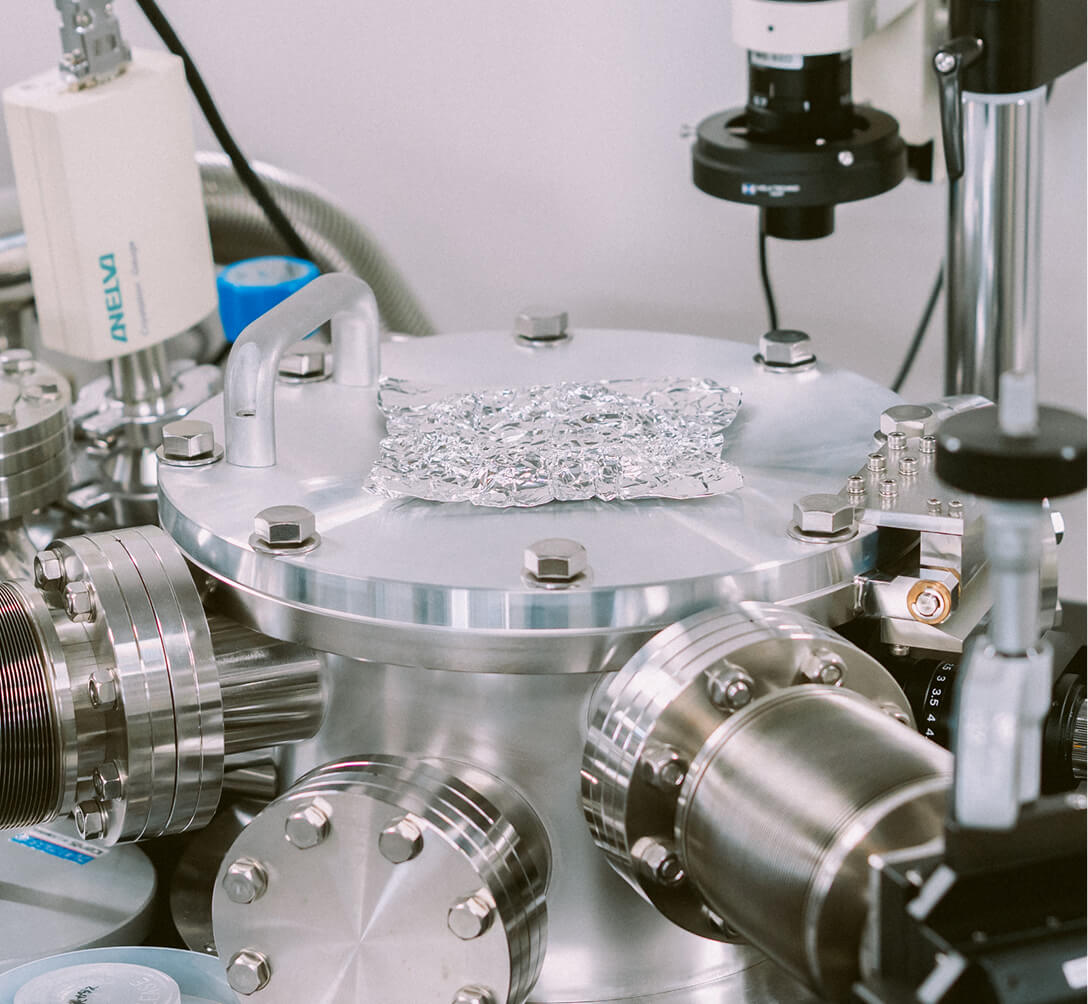
As climate change mitigation has become an urgent global challenge, technologies that convert carbon dioxide (CO₂) into valuable chemicals and fuels—commonly referred to as CO₂ utilization or carbon recycling technologies—are attracting growing attention as key enablers of carbon-neutral and even carbon-negative societies. Achieving international and national goals such as carbon neutrality by 2050 requires not only efforts from CO₂-intensive industries, but also close collaboration among academia, industry, and government, with society as a whole taking collective and proactive action.
Our research group focuses on diamond-based materials for CO₂ utilization processes, leveraging the unique electronic properties of diamond together with its exceptional chemical and electrochemical stability—characteristics rarely found in other materials. By precisely controlling surface termination and layered structures of diamond at the atomic level, we have established original technical expertise that enables highly efficient and highly selective CO₂ reduction reactions. This capability constitutes a central strength of our group.
In recent years, many novel CO₂ reduction catalysts and technologies have been proposed that demonstrate impressive conversion efficiencies and reaction rates. However, materials with limited catalyst lifetimes that require frequent replacement or disposal inevitably incur additional energy consumption and CO₂ emissions during their synthesis, use, and end-of-life processing. From this perspective, we believe that evaluating the entire material life cycle—not only reaction performance—is essential for technologies that genuinely contribute to carbon neutrality or carbon negativity. Diamond, which exhibits extraordinary resistance to degradation and corrosion even under harsh chemical environments, is therefore an exceptionally promising material for long-term, stable operation in CO₂ utilization technologies.
One of our core research themes involves the use of detonation nanodiamonds—diamond materials characterized by unique crystal structures and surface properties—as catalysts or electrode surfaces to enhance CO₂ reduction performance and to elucidate the underlying reaction mechanisms. Furthermore, by applying our proprietary surface modification techniques, we have succeeded in achieving a level of product selectivity control and access to new reduction products that were previously difficult to realize with conventional diamond materials. Detonation nanodiamonds are also notable for their high productivity among synthetic diamond materials, making them well suited for practical implementation and industrial-scale applications.
In addition, our group actively collaborates with industrial partners, and demonstration experiments using chemical plants are already being planned. The availability of an environment in which research can be conducted using real data obtained under conditions close to industrial scale—rather than being limited to laboratory settings—represents another major strength of our group. This framework allows us to pursue research and development seamlessly from fundamental studies through to social and industrial implementation.
More recently, we have successfully demonstrated a challenging concept: a visible-light-driven photoelectrochemical CO₂ conversion system. Building on this technology, we aim not only to contribute to the realization of a sustainable energy and resource-circulating society that integrates renewable energy with carbon recycling, but also to propose a new academic field centered on the application of diamond materials to green chemistry. Through these efforts, we seek to maximize both the scientific and societal impact of our research.
By fully harnessing the potential of diamond—often regarded as an ultimate material—we are committed to creating innovative technologies that address some of the most critical challenges facing modern society, including the reduction of environmental burdens and the advancement of sustainable resource circulation.
 Group Members

Associate Professor
Taro YOSHIKAWA
Professor
Hitoshi ASAKAWA